There are plenty of reasons to feel good about buying something. It arrives on time, the person loves it, it doesn't look like something grabbed off a garage shelf at half nine on a Saturday morning. But there's another one that's become harder to ignore...knowing it wasn't produced in a way that did quiet, unnecessary damage along the way.
Greeting cards don't feel like a big environmental conversation. They're small, they're paper, they seem fairly harmless. But the industry behind them is massive, and like most massive industries, some of the details are a bit grimmer than the little watercolour flowers on the front would have you think!
The problem with mass-produced cards
Mass production tends to mean less care about what goes into the paper in order to keep costs low. Big-box cards often use virgin paper pulp (contributing to deforestation) and cheap, petroleum-based inks. Foil stamping, glitter, and plastic embellishments are essentially microplastics that make a card un-recyclable, even if the paper base is fine. Many people don't realise that a card with glitter on the front can't go in the paper recycling bin.
What's different when it comes to independent makers?
When you buy from a small, independent card brand, the decisions about materials are usually a lot more considered. Not because indie makers are saints, but because they're making deliberate choices about every single part of their product. There's no department ordering whatever's cheapest in bulk. It's someone deciding what paper to print on, how it's packaged, and what happens to it afterwards.
Whether they are handmade or small-batch production, overall they mean less waste. If a design doesn't sell, you're not left with ten thousand units heading for landfill. Independent brands tend to produce closer to demand, which is better for the planet and, honestly, better for business.
Independent card brands also tend to make more deliberate choices about packaging, recycled or recyclable materials, and minimalise waste. Not because it's a marketing angle, but because when you're running a small operation, every choice becomes a conscious one.
The cards worth keeping
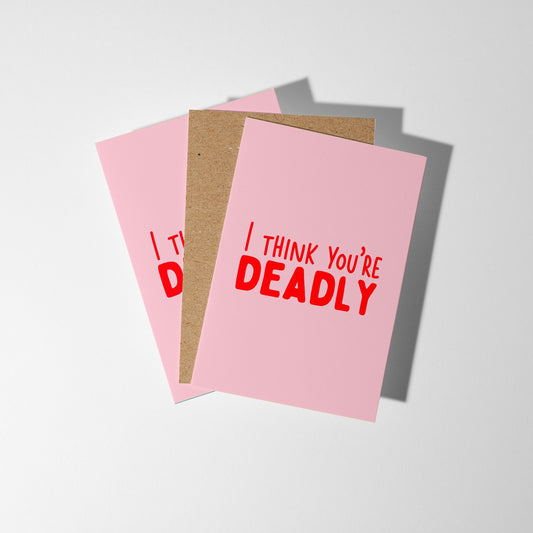
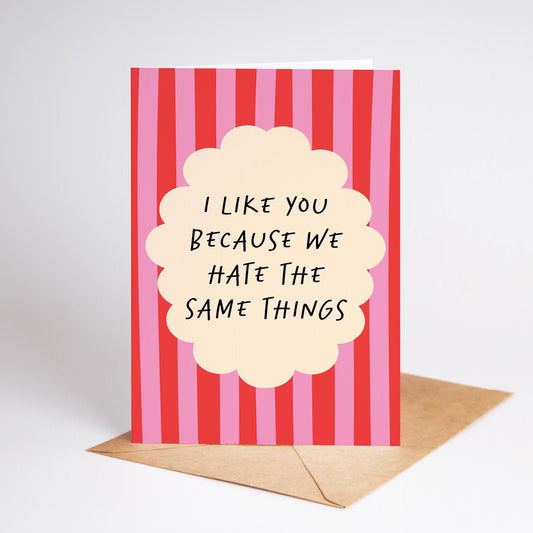
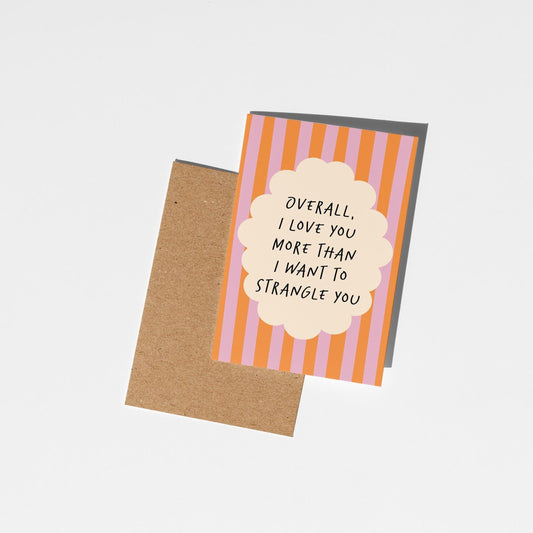
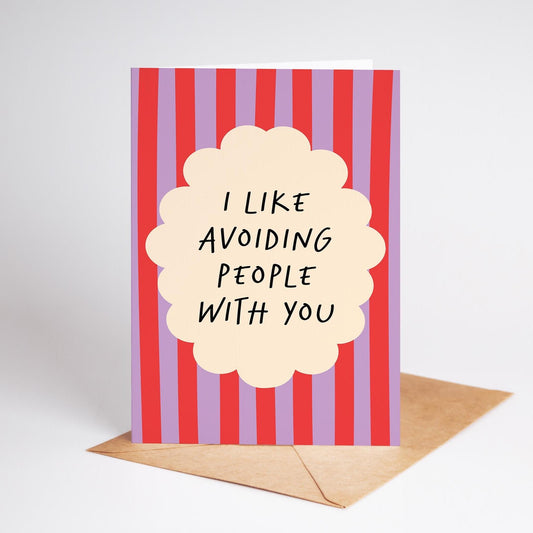
There's a reasonable environmental argument to be made for buying something people will actually hold onto. Cards that are funny, well-designed, or say something a bit more original than "wishing you a wonderful day" tend to end up on fridges and bookshelves rather than in the recycling bin two days after the birthday. A card that lives in someone's kitchen for six months has a much better footprint than one that gets opened, smiled at politely, and binned before the week is out. When something feels considered, it tends to be treated that way too.
It's the same logic as buying fewer, better things. The most sustainable version of anything is the one that doesn't need to be replaced or thrown away.
It's not about being perfect
Nobody's suggesting everyone needs to audit the supply chain of every card that they buy. But some swaps are genuinely easy, and this is one of them.
Buying from an independent brand means less plastic waste, more considered production, better materials, and something that was actually designed with a bit of care. You also end up with a card that's more likely to raise a laugh or mean something, rather than one that gets lumped in with the junk mail.
The greeting card industry isn't going anywhere, and neither are the occasions that nee one. But there's a version of that purchase that has a little less impact on the enviornment and ends up on someone's fridge for six months rather than in the bin by Friday, sometimes it just takes being a little organised.